.png)
.png)
Tips - Kitchen and Bathroom Cleaning in Rainy Season: Where Germs and Mildew Hide in Seattle-Area Homes
NOV
14
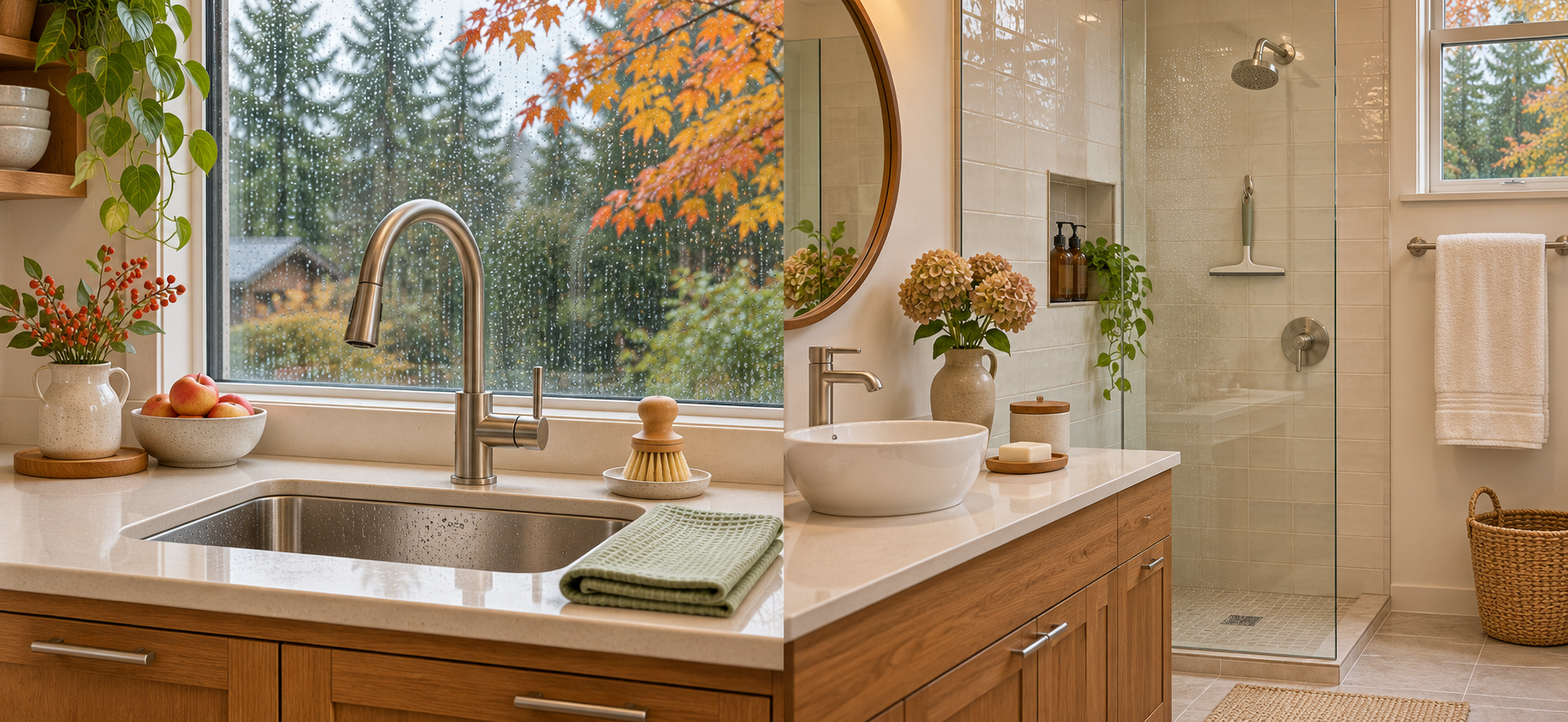
Kitchen and Bathroom Cleaning in Rainy Season: Where Germs and Mildew Hide in Seattle-Area Homes
- 2026-11-14
- in Tips
our Kitchen and Bathroom Work Harder in November
When the rain settles in around Kenmore, life moves indoors. You cook more, shower longer, run the heat, and keep the windows shut. The two rooms that handle the most water, food, and steam are the kitchen and the bathrooms.
They're also the two rooms where problems show up first: a musty smell, dark spots in the corner of the shower, a sponge that never quite dries, a sink that never feels fully clean.
The good news is that most of it comes down to a few overlooked spots and a few simple habits. This guide shows you where germs and mildew like to hide, and how to keep both rooms fresh through the wet months.
Why Rainy Season Is Tough on These Two Rooms
Moisture is the common thread. In the Pacific Northwest, the air outdoors stays damp for months, and the air indoors picks up even more from cooking, dishwashing, laundry, and hot showers. When that moisture has nowhere to go, it settles on surfaces, in corners, and in grout lines and caulk.
That's what turns a normal bathroom into a place where mildew starts to show up, and what makes a kitchen sink area or fridge seal feel never quite dry. Add the food, grease, and bacteria that come with everyday cooking and bathroom use, and you have two rooms that deserve a little extra attention from now until spring.
The key is to focus on the spots that hold moisture or get touched constantly. Those are the places a quick wipe-down usually skips.
Kitchen Hotspots Most People Overlook
You probably wipe the counters every day. These are the spots that tend to get missed:
- The sponge and dish brush. They stay damp and pick up food particles, so they're one of the dirtiest items in the house. Let them dry between uses and replace them often.
- The sink and faucet. Clean around the base of the faucet, the handles, and the drain, where residue and moisture collect.
- Cabinet and appliance handles. You touch them with your hands all day, including while cooking. A quick wipe with a suitable cleaner goes a long way.
- The fridge handle, shelves, and door seals. Spills hide in the rubber seals, and the fridge door is touched constantly.
- The trash can and its lid. Wipe the lid and the outside, and rinse the inside regularly.
- Small appliances. The coffee maker, toaster, and microwave handle all collect residue that's easy to forget.
- The backsplash and the wall behind the stove. Grease builds up slowly and gets harder to remove the longer it sits.
- Cutting boards. Wash them thoroughly after each use, and replace boards with deep cuts that are hard to clean.
Picking just two or three of these each week keeps the whole kitchen from ever needing a big catch-up.
Bathroom Hotspots: Where Moisture and Mildew Settle
Bathrooms are where the rainy season shows most. Mildew loves warm, damp, poorly ventilated spaces, so look closely at these areas:
- The shower and tub corners. Soap scum and moisture collect where walls meet the tub, and where the tub meets the floor.
- Caulk lines. The sealant around the tub, shower, and sink holds water and is often the first place dark spots appear.
- The shower curtain or liner. The bottom edge stays wet and gets slimy. Wash it regularly or replace it when it can't be cleaned.
- The exhaust fan and vent cover. Dust builds up on the cover and slows airflow, which means steam hangs around longer.
- The bath mat and towels. Damp fabric left on the floor or a hook can develop odors. Let mats dry fully and wash them often.
- The base of the toilet and the floor behind it. These spots are easy to miss and collect dust and splashes.
- The sink drain and faucet. Toothpaste and soap build up around the edges and the overflow hole.
- Toothbrush holders and soap dishes. They sit wet most of the day and are rarely washed.
One of the most effective habits for a bathroom is also the simplest: run the exhaust fan during and after every shower, and leave the door open afterward to let the room dry. Squeegeeing the shower walls takes under a minute and helps keep soap scum and mildew from taking hold. If your grout is already showing its age, our guide to getting tile clean again can help.
A Simple Routine for Both Rooms
You don't need hours. You need a rhythm. Here's a routine that fits a busy schedule:
Daily (about 5 minutes)
- Wipe the kitchen counters and stovetop after cooking.
- Rinse the sink and let the sponge dry.
- Run the bathroom fan during showers and hang towels so they dry.
- Squeegee or wipe the shower walls after use.
Weekly (about 30 minutes)
- Disinfect high-touch spots such as handles, faucets, and switches.
- Scrub the toilet, sink, and shower or tub.
- Wipe the fridge handle and the front of appliances.
- Take out the trash and wipe the can.
- Mop the floors in both rooms and wash bath mats.
Monthly (about an hour)
- Clean the inside of the microwave and the fridge shelves.
- Wipe cabinet fronts and the backsplash.
- Dust the exhaust fan cover and the vents.
- Check caulk lines for dark spots or peeling.
- Wash the shower curtain or liner and clean the drains.
If the monthly list feels like more than you want to take on, you're not alone. That's usually the point when people start looking for a little help.
Clean Safely, and Clean the Right Way
Kitchens and bathrooms are where most people reach for stronger products, so a few ground rules matter:
- Never mix cleaning products. Bleach combined with ammonia or with other cleaners can create dangerous fumes. Use one product at a time and rinse between them.
- Read the label. Many disinfectants need to stay wet on the surface for a few minutes to work. Wiping them off right away reduces how well they do their job.
- Ventilate. Open a window or run the fan while you clean, especially in a small bathroom.
- Match the product to the surface. Natural stone, some countertops, and certain finishes can be damaged by harsh or acidic cleaners.
- Change your cloths. Using the same cloth in the kitchen and the bathroom spreads germs from room to room. Keep separate cloths for each.
- Dry when you're done. Because moisture is the real problem in rainy season, a dry surface is a cleaner surface.
Let Master Maid Keep Your Kitchen and Bathrooms Fresh
You work hard all day, and the last thing you want in the evening is to scrub a shower or wipe down behind the stove. For more than 8 years, Master Maid has helped homeowners across Kenmore and the Greater Seattle area come home to a clean, fresh space, with a vetted, reliable team they can trust.
Here's how we can help through the rainy months:
- Deep Cleaning to reset your kitchen and bathrooms from top to bottom, including the corners, fixtures, and hard-to-reach spots.
- Recurring Cleaning (weekly, bi-weekly, or monthly) so moisture and buildup never get the chance to settle in.
- Flexible scheduling around your life, with mornings, afternoons, weekdays, and weekends available.
- No long-term contracts, and we match any competitor's offer.
Want to skip the scrubbing this winter? Get an instant estimate with our service calculator, or call us at (425) 624-9025 to book your cleaning.
LATEST TIPS


TAGS
© Copyright 2026 Master Maid Services | House Cleaning in Seattle, Kenmore & Bellevue, WA. Made with by Dunnas Tecnologia